
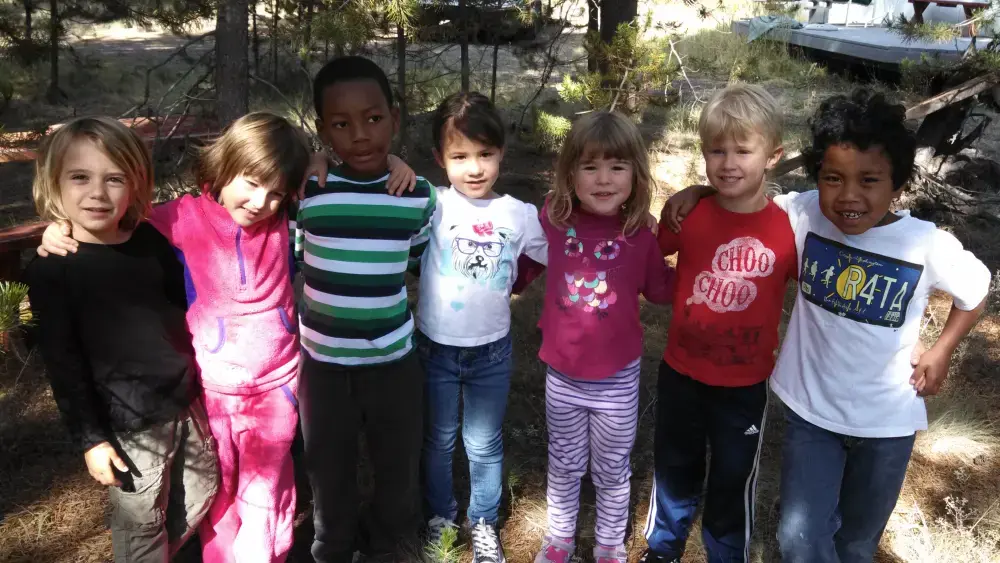
We respect, celebrate, and embrace the collective mixture of differences of our ABC community as a rich tapestry. Therefore we will not discriminate based on race, religion, gender, sexual orientation or physical disabilities.
Investigate
Negotiate
Cooperate
Hypothesize
Visualize
Exercise
Conceptualize
Listeners
Inventors
Creators
Dreamers
Explorers
Readers
Writers
Thinkers
Builders
Problem Solvers
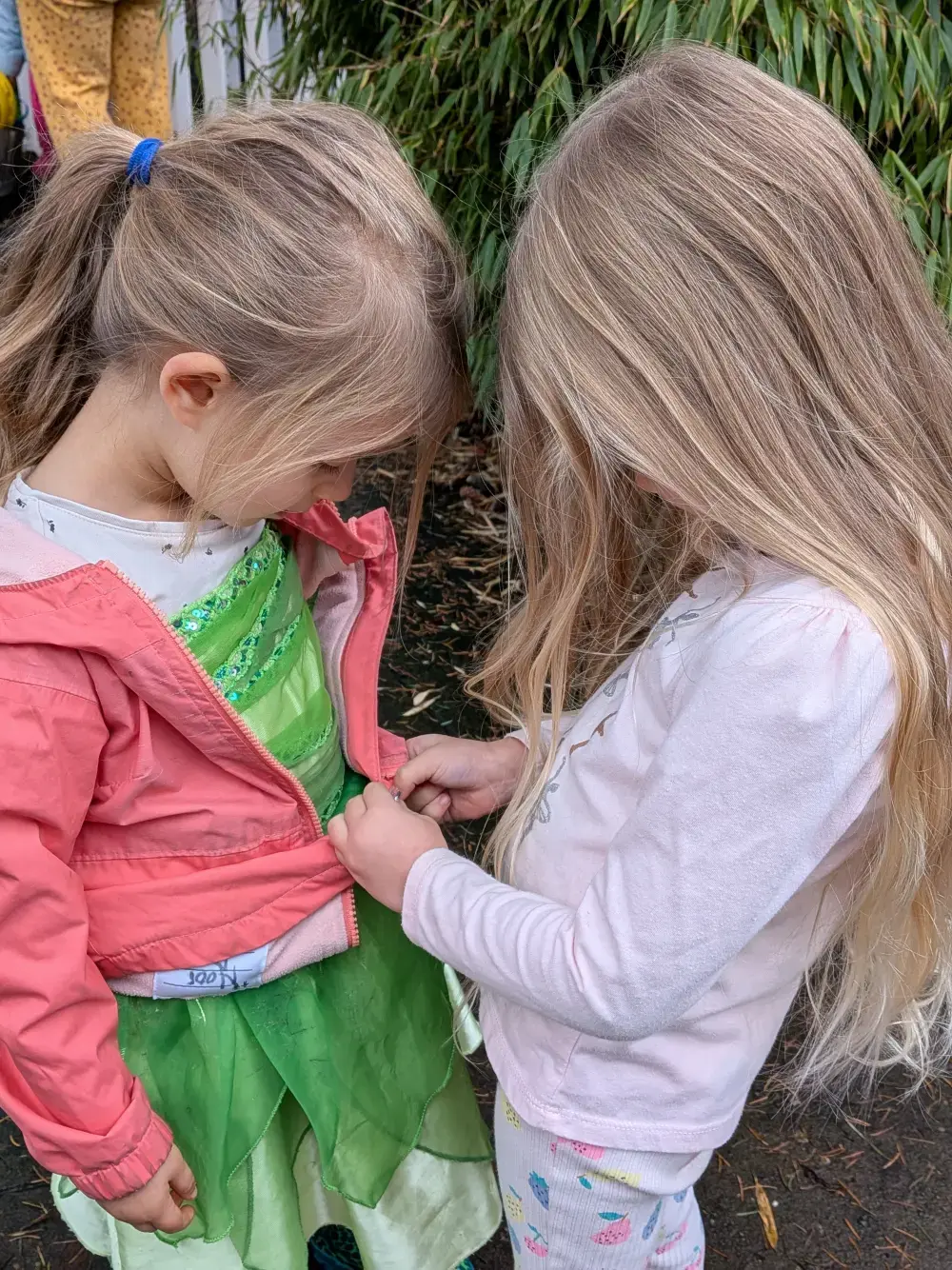
We designed our program to be mixed age because children mature developmentally rather than chronologically. Our mixed age program honors each child's growth whether they are a two year old who can easily work through a thirty piece puzzle or a four year old who is working on potty training. We strive to create a program that is unique to each child. We observe the children's growth and match our experiences and expectations to their developmental level. We believe that children can learn from each other in a unique and beneficial way. Children learn by example and provide examples; they learn to care for and help each other.
We have purposefully created a full day preschool program for one reason—the children. Young children, by nature, find transitions difficult. Children today live in a rushed generation; a time when things are fast, convenient, and scheduled. We know that a full day allows us to give children the gift of TIME. Time to build a huge spaceship with blocks all morning. Time to listen to lots of stories. Time to plant hundreds of bulbs. Time to explore the world, investigate our environment and engage with their friends. Time to enjoy each other and the world around us. Fewer transitions and large blocks of time to explore create the natural flow to our day which children understand and rely on.
Julie Horner and Shannon Weir have degrees in Early Childhood Education and over 50 years of combined experience teaching young children. After working in a large center, Julie and Shannon created ABC. We believe children need consistent relationships with educated teachers, lower ratios and smaller groups. Our ratio exceeds the state ratio of one teacher to ten children. There are always at least two teachers at our school to better meet the children's needs and to keep them safe. In addition to Julie and Shannon, we have two full time staff. Ashley and Molly round out our teaching team. Giving us a ratio of 1 to four the majority of the time. We desire a long-term relationship with children (and their families) and strive to create a program unique to each child along his or her path of development.
We value our team of teachers and support staff, we strive for diversity and we provide fair compensation. We also provide PTO, paid holidays, 401k, health insurance and paid training. We strive for a work environment with open communication and respect for individualism and creativity.
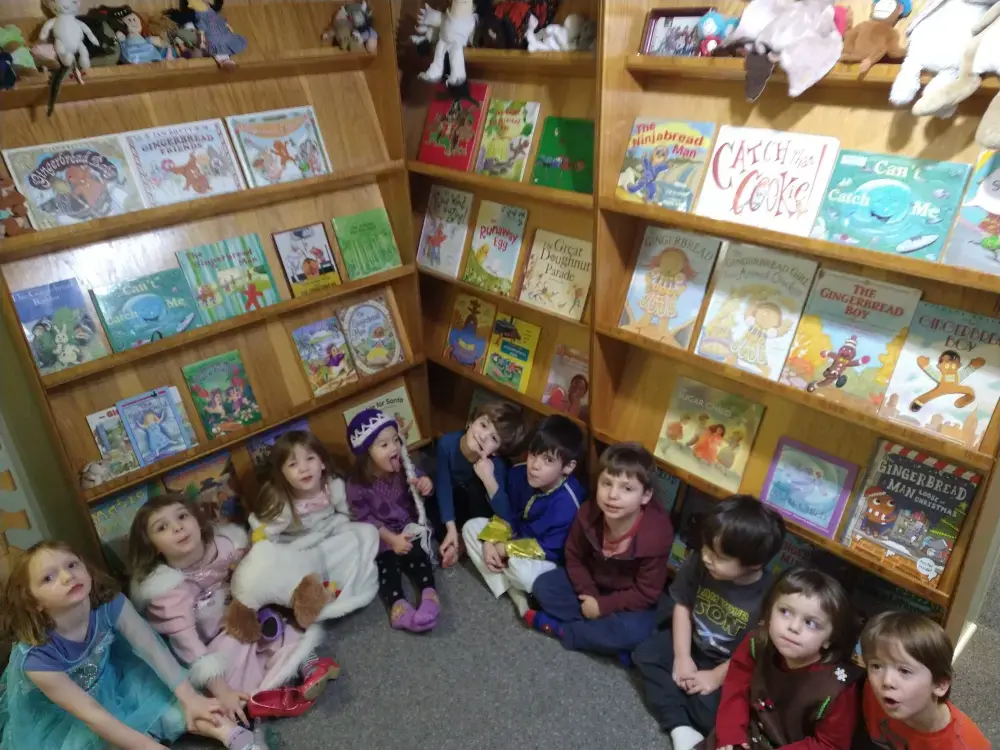
How many Dr. Seuss books can you remember? What was your favorite? During our "Seuss Celebration" we real all eighty-six. Imagine that opportunity! Imagine a library at your fingertips every day! Our love of books and the importance of literacy experiences for the children is demonstrated by our school library. With over one hundred books available daily (and a thousand more to be rotated on a monthly basis), our library gives children many opportunities to "read" and hear quality literature throughout the day, not just at "group time". We use our themes to help guide our rotation of books. However, favorites can be requested at any time! We visit our neighborhood bookstore, A Children's Place, to hear authors read their books. Books are an integral part of our program.
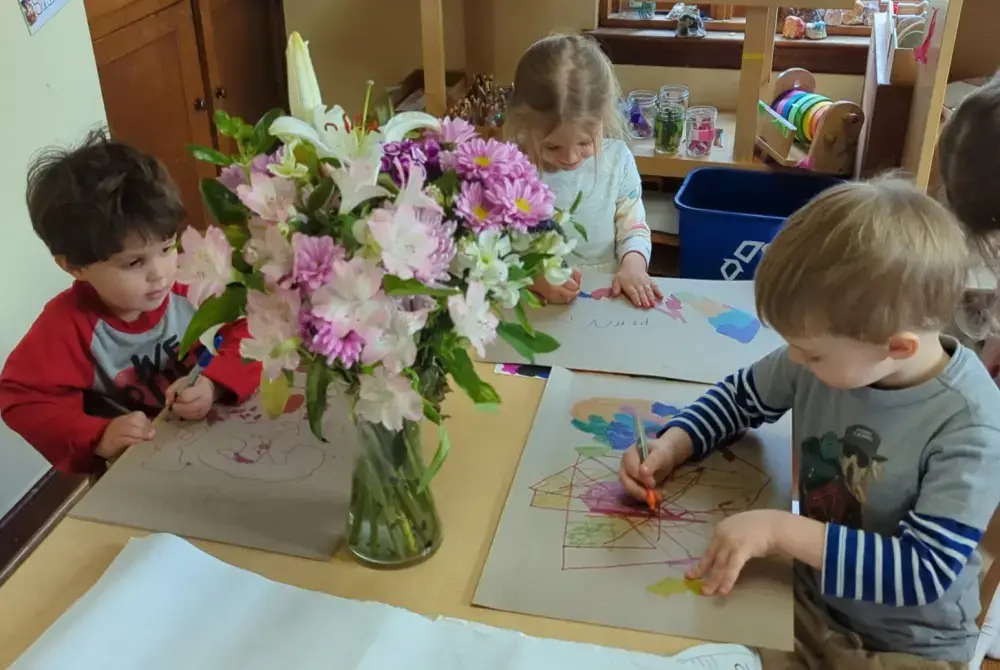
In our art studio, these and other art materials are always available for the children to use and explore to their hearts' content. When children are given opportunities to problem solve "which lasts longer and holds better, glue or tape?" or "what do you need to support the back of a paper mask?" they become creators, inventors and problem solvers. By having the opportunity to use these materials the child is developing the skills needed for writing as well as learning to express themselves in a creative way. The small muscle development and eye hand coordination necessary for holding pencils is strengthened by cutting, squeezing glue, and gripping crayons.
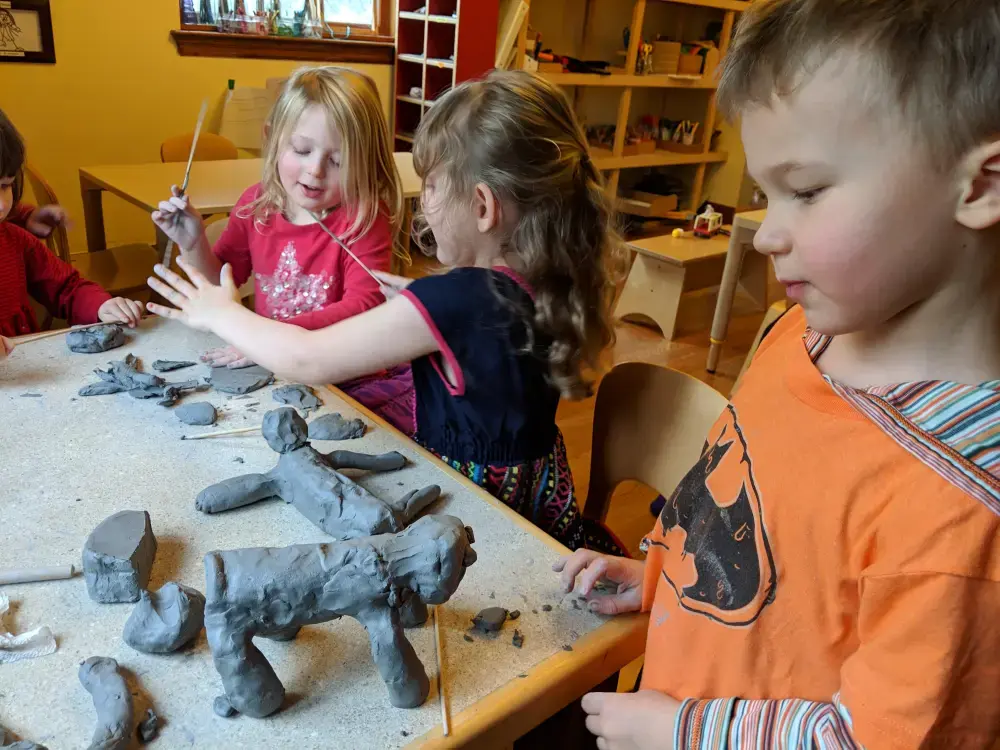
At ABC we use clay because clay has all the tactile aspects of playdough plus lots of extras. Clay, like most everything else in our learning environment, is always available. Children delight in getting out the clay and a clayboard when an idea hits them. We often hear them say, "hey, let's go make that out of clay!" and they dash off. Children who spend lots of time with clay understand it; they learn how to mold, shape and build so they clay will reflect their visualization. If a child decides he is happy with his creation, he can save it, send it to the kiln, paint it and mount it. A process that can take some time. This process requires patience as well as creativity. Although the masterpieces the children make are just that; the process is what is important.
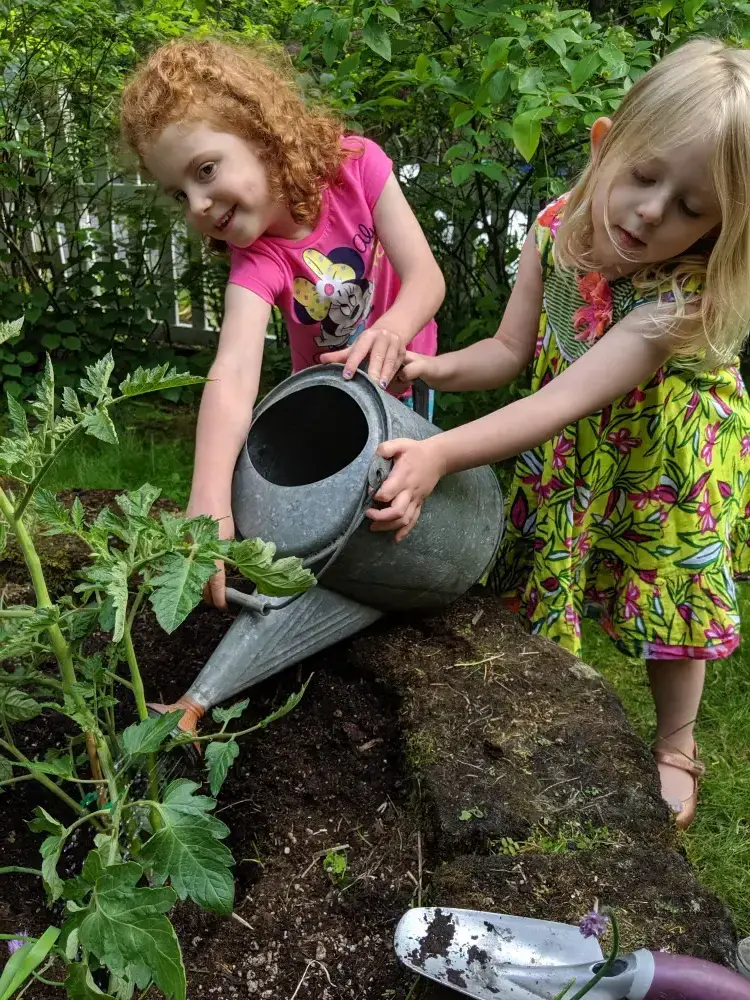
We are fortunate to garden year round at ABC. We have an indoor gardening system that allows us to start from seed plants that we will watch, tend and enjoy. In early spring we will nurture these seedlings that will flourish in our outdoor garden. Preparing the soil, planting the seeds, watering and weeding are jobs the children enjoy as they wait for the flowers and vegetables to grow. Their patience pays off as they dig potatoes, pull carrots, and enjoy finding a "finally red" tomato. Every fall we celebrate our harvest together and make salsa. The children are always excited to pick the ingredients, prepare the salsa, and share it with their friends and families.
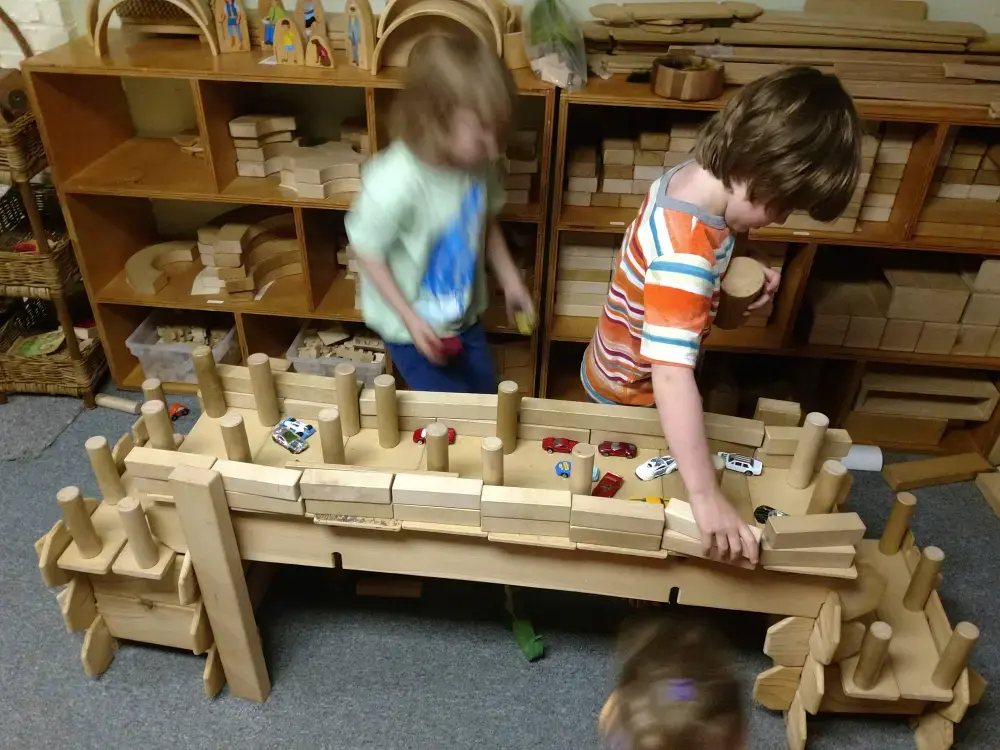
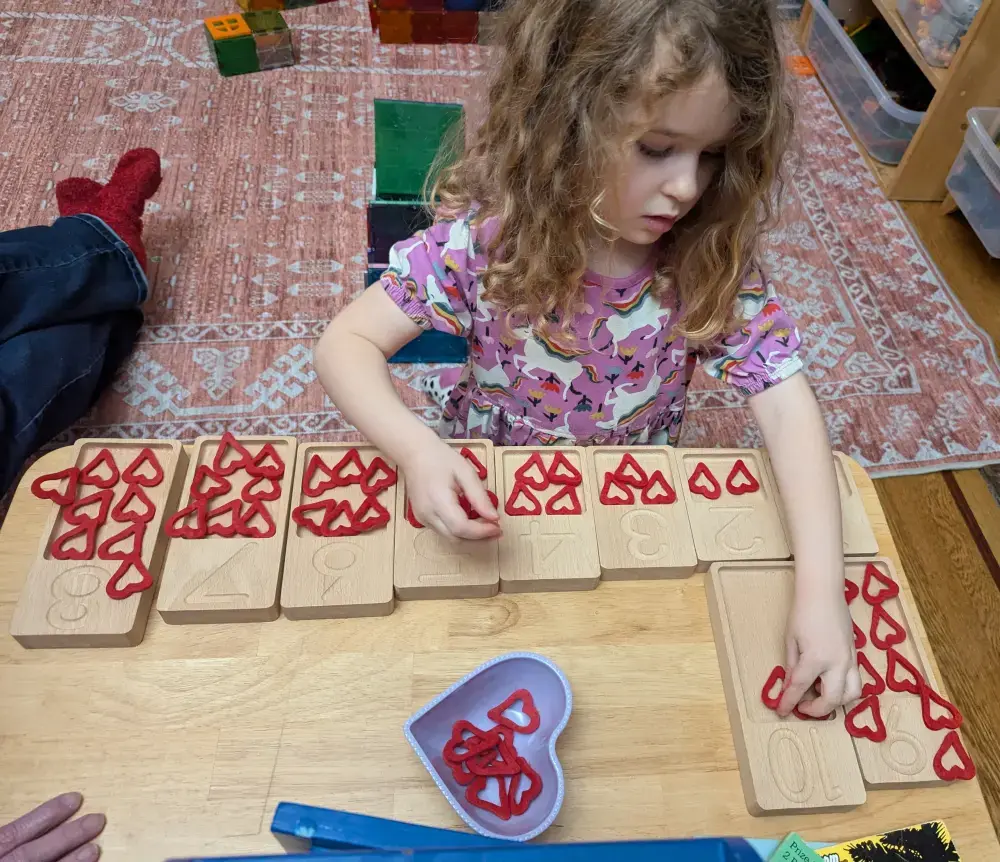
Imagine a room with enough blocks and trains for children to build to their heart's content. We feel strongly that limiting block and train play to a table or corner robs the children of the chance and challenge of designing their won structures and layouts. Our block room has a wide variety of mathematically accurate blocks available. Through hands-on experience with unit blocks, children learn math and spatial concepts and develop social skills. Block play enhances physical development, expands language, and fosters creativity. Block play stimulates dramatic play as block represent castles, cities, and fire engines. Cooperation and verbalization are necessary skills for this area, as well as life.
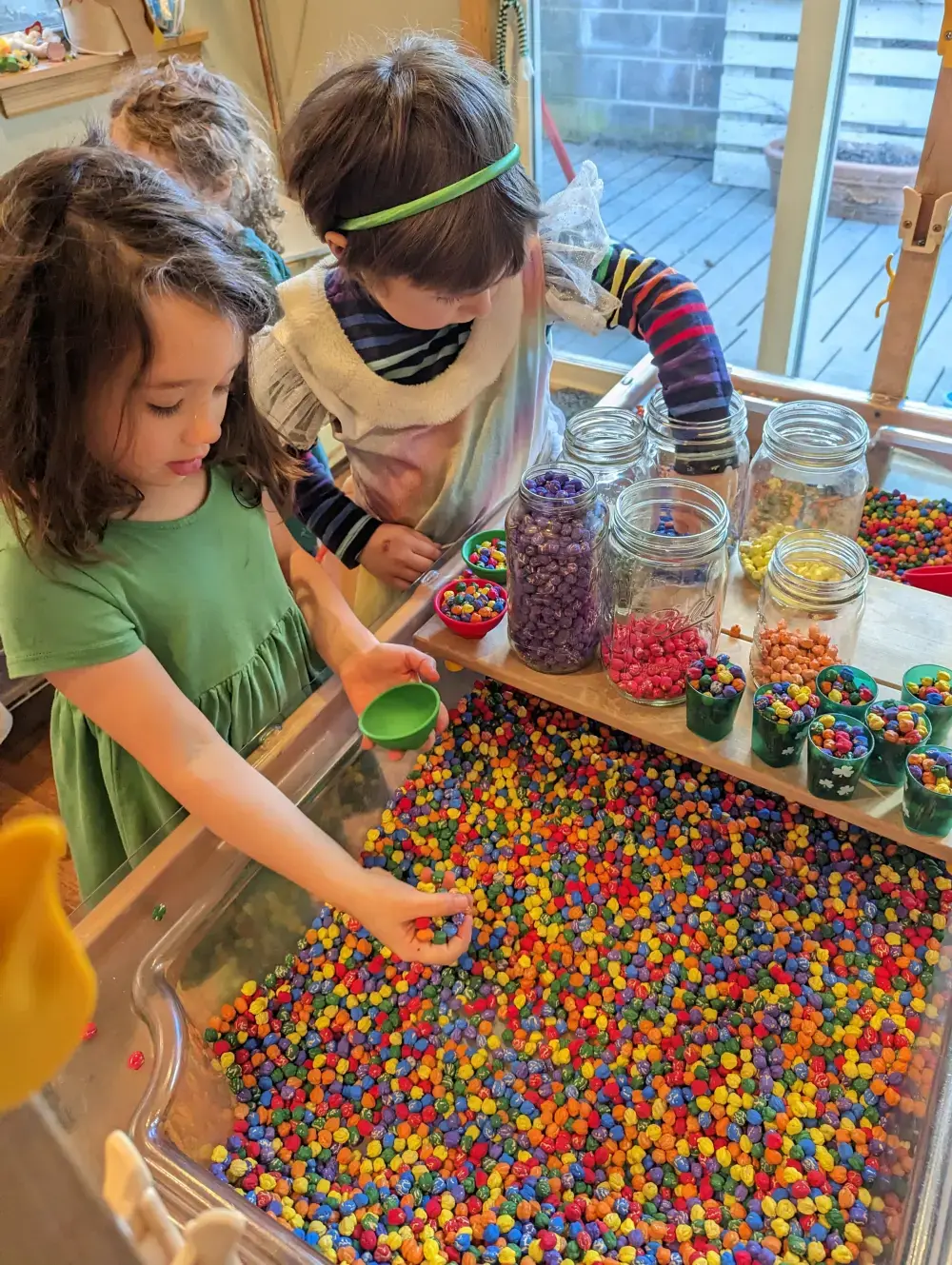
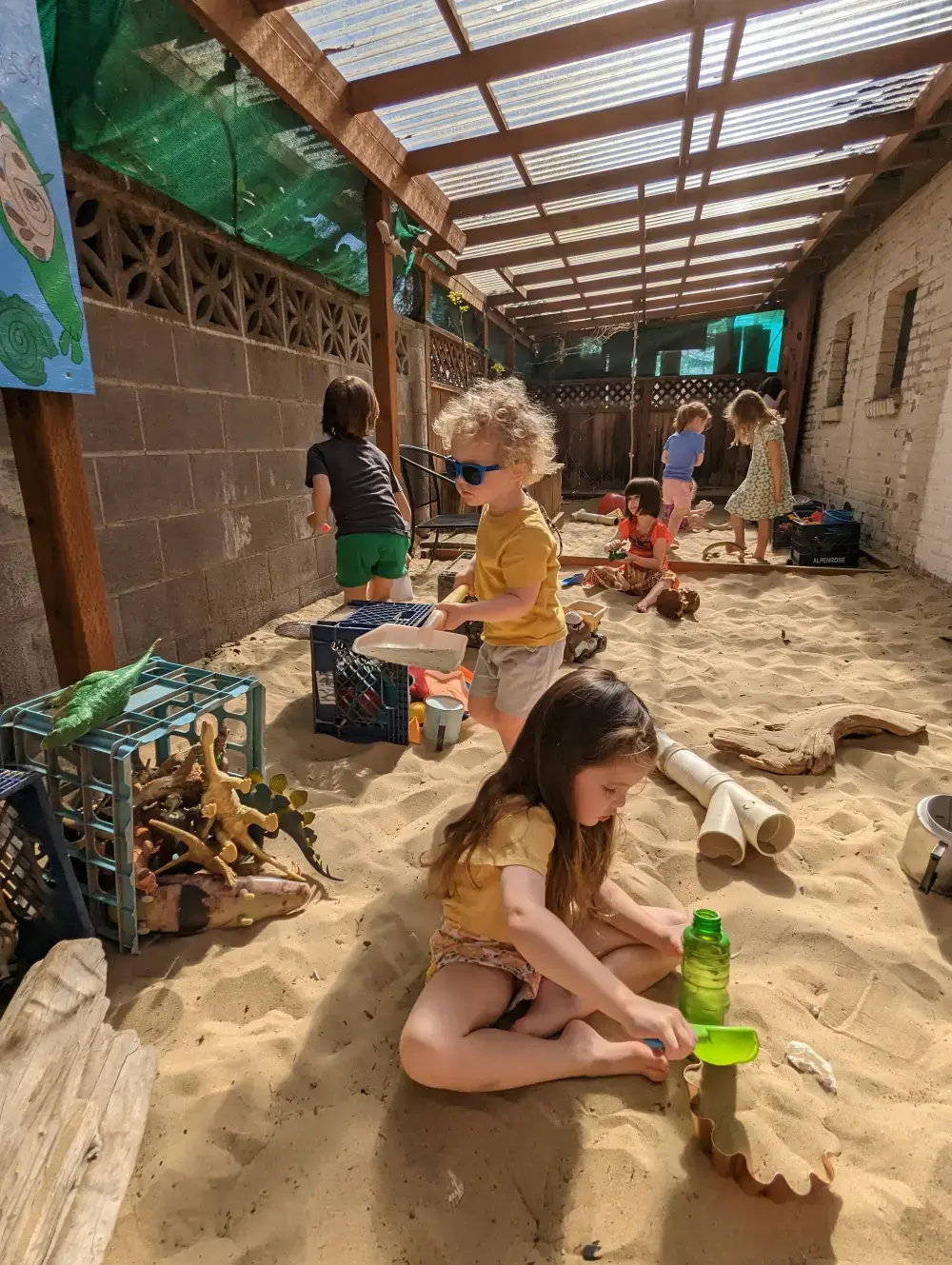
Imagine having a tub full of "slime" to touch, pour, squeeze and drip through your fingers. By rotating activities, our tactile tub becomes a place where children can dig for fossils, make mud pies or find hidden treasures. They experiment and manipulate a variety of textures while creating a continuous chain of rivers, waterfalls and lakes or a construction site where workers use pulleys to hoist sand and building materials into place.
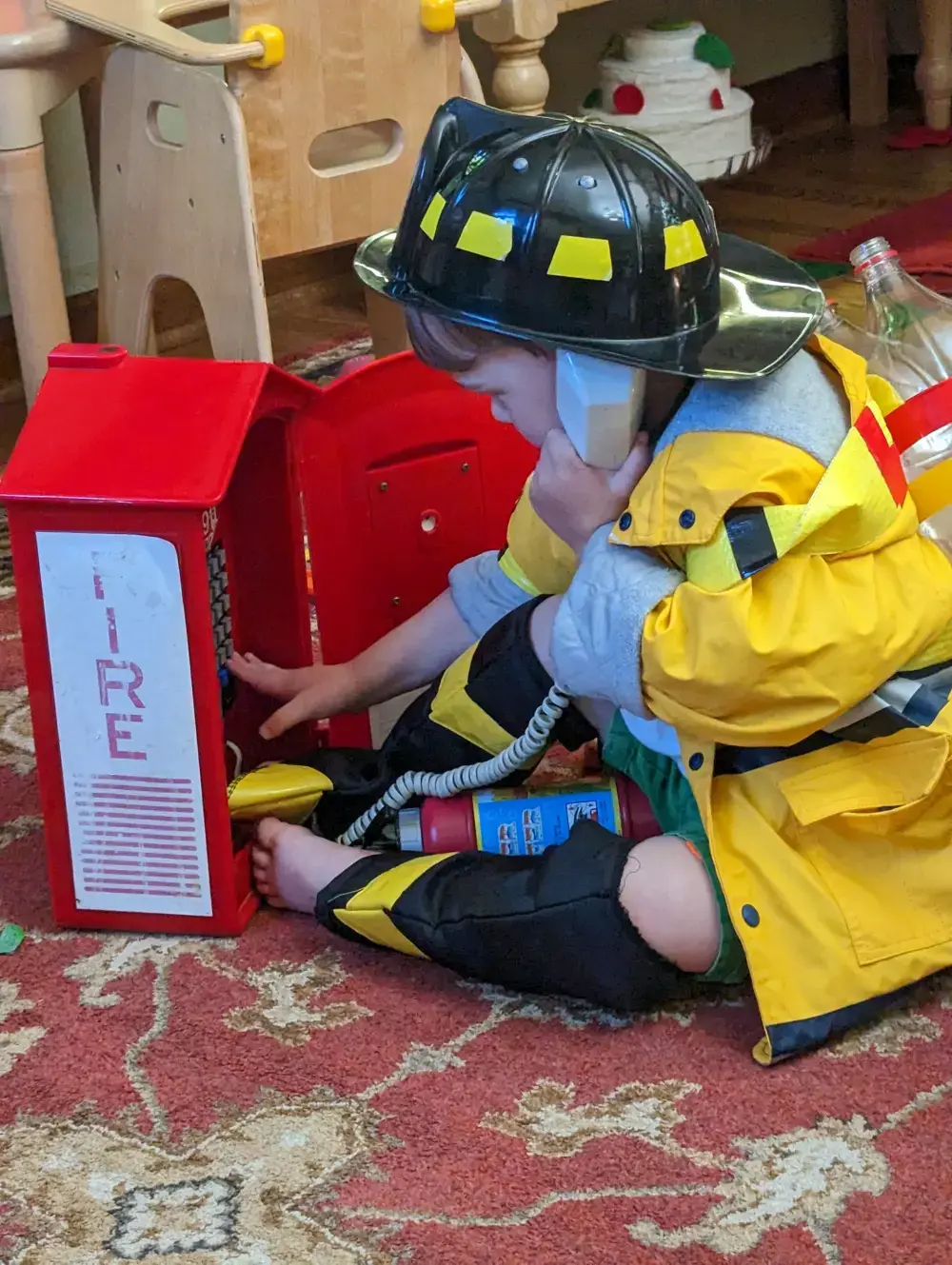
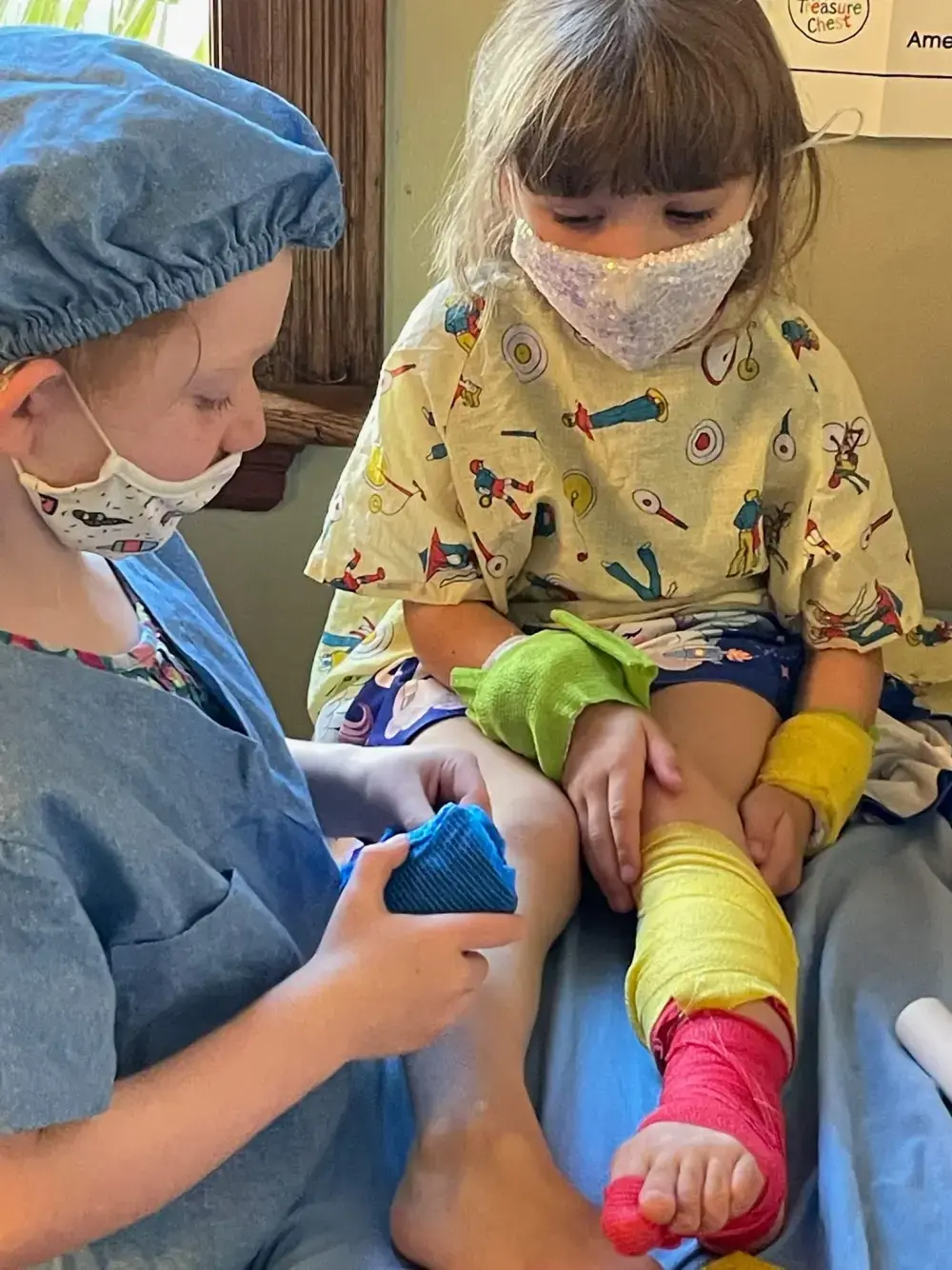
Imagine being a snake slithering around a block structure you've built or wearing a silly hat as you work on your favorite puzzle or wearing a beautiful dress while you dance around the room. These are precious and important childhood experiences. Dramatic play is the foundation for imaginative experiences. Imagination and creativity are enhanced as children engage in make believe activities that will become a part of their life. Cooking a pretend dinner, washing and cuddling a doll, dressing up as a firefighter are experiences that allow children to explore and experience roles and social situations. Dramatic play expands a child and helps her to understand the world around her and her place in it.
Children in our program play dreidel at Hanukkah, eat oranges and receive red envelopes at Chinese New Year and enjoy the piñata at Cinco de Mayo. These celebrations are not token holidays, rather a real reflection of our group and its diversity. The children know "Alexander celebrates Christmas and Hanukkah but Brianna celebrates just Christmas" just like they know Luca calls water "agua" and Anna's mom speaks French (she also makes yummy crepes to share). We recognize holidays and traditions as important events in your child's life. We wish to celebrate along with you, creating lasting memories for your child. We hope that you will share with us your family's traditions.
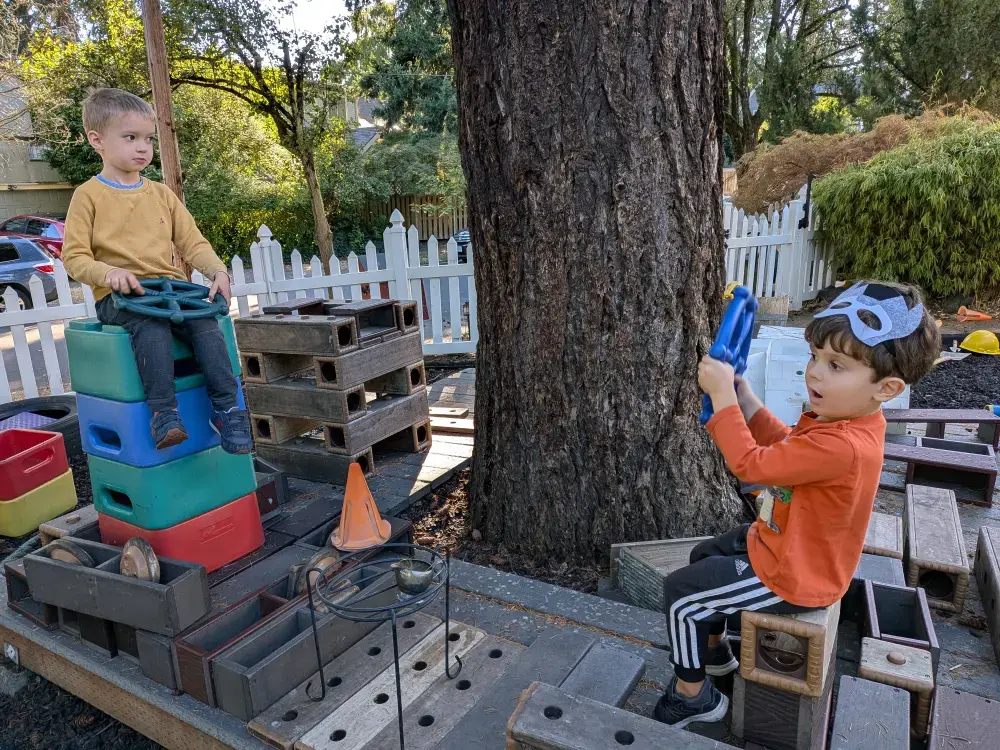
We have two separate playgrounds, each with its own outdoor experiences. Our discovery garden accommodates a child's natural inclinations to poke, prod, nurture, jump, climb, and hide. There is a large area for running and a bean house for hiding with a friend while snacking on yard-long green beans. Children jump off raised garden beds and balance on a series of log stumps. A stage is waiting for performers, dancers, and musicians nestled in the trees. It was a parent-built graduation gift from the class of 2024. Under our big fir tree is our outdoor block area. It contains large blocks made from different materials to build, create and play with.
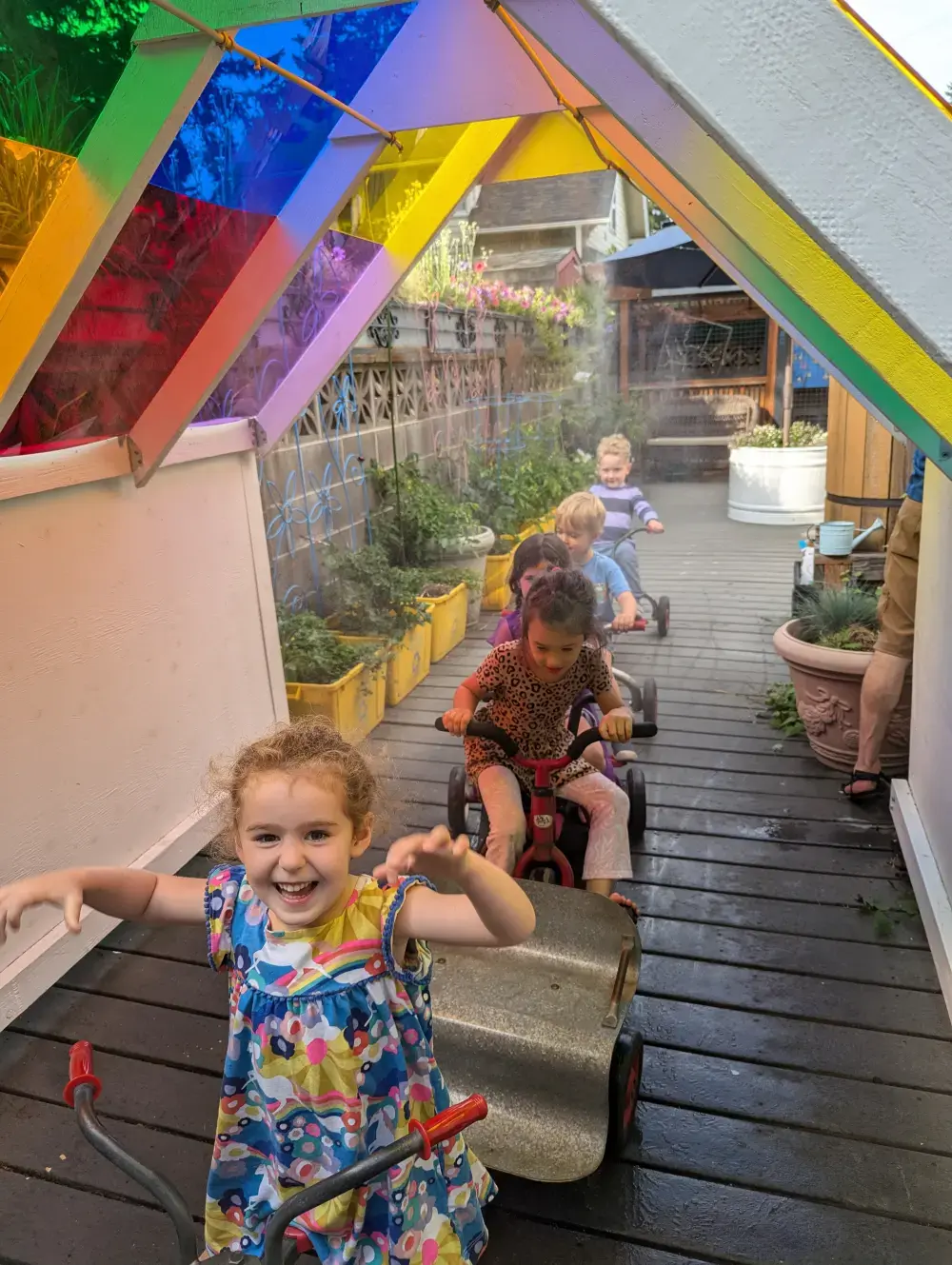
Our discovery playground is a large deck with lots of room for riding trikes and exercising our bodies. It is surrounded by child planted raised garden boxes. Behind the barn door is our own "sandy beach," a covered area filled with real white beach sand for burying, digging, scooping and making sand castles. A child sized rock climbing wall strengthens muscles and builds confidence. Outside is a place to be one with nature, to exercise our minds and spirits as well as our bodies.
Have you ever watched a chick hatch?
Have you ever watched a butterfly emerge?
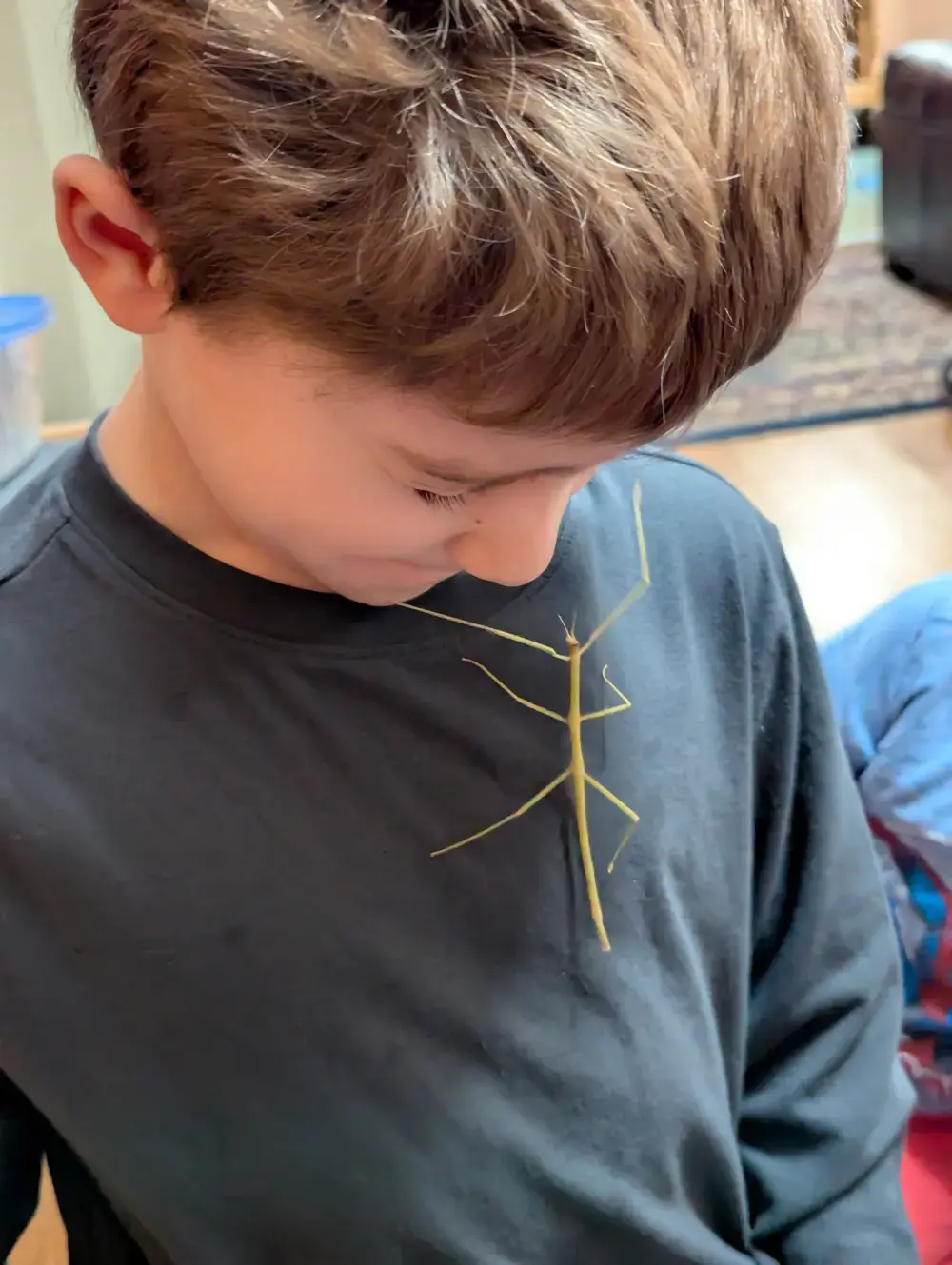
Have you ever watched a walking stick shed?
Our preschool celebrates science. Science permeates our program. The children love to play with and watch the worms in our worm bin. They explore and experiment with magnets, spinning tops, light and shadows. Many recess hours are spent finding and watching the animals and insects that we share our discovery garden life with. Not only do we get to watch the chicks hatch, we get to watch them grow and develop. We feed them, talk to them and count and collect their eggs. Our chickens are part of our ABC family! Science experiences allow the children to discover, predict, challenge and wonder.
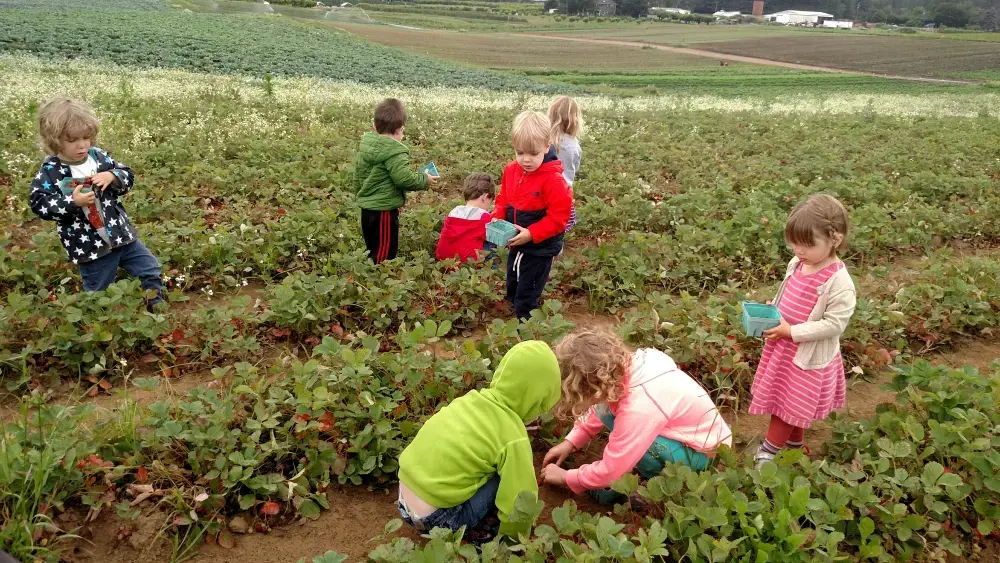
You may not have these memories, but ask any of the children at ABC and they'll tell you that Keanan is a great green bean picker, that blueberries grow at "Blueberry Kingdom", that strawberries should be red, that Andrew can hand down two apples from the apple tree and two year olds do lots of eating and not much picking. As much as we practice by experience, our children become expert fruit and vegetable pickers, giving us lots of data to graph at school. By the end of the season, we have a large graph showing how many pounds of each produce we picked, adding math that is relevant to the experience. We save our harvest to enjoy year around and believe in sharing the fruits of our harvest. Can you smell the fresh corn on the cob, taste the strawberry jam and the homemade apple crisp that the children take home to share with their families? Not only is the product shared, but the experience as well.
Our school uses themes to guide the materials, toys and books that we have out, and the projects we do. For example, during Castles, children may explore jewels in the tactile tub, try on crowns and long red robes in the dramatic play area and design their own castle in the block area. During Dinosaurs, the children pretend to be paleontologists excavating fossils from the tactile tub, they share books and songs about dinosaurs and act out looking for food, or burying eggs and protecting their babies. In the spring, when we focus on Butterflies, we watch small caterpillars eat and grow. We marvel as they spin their chrysalis and emerge as butterflies. We gently hold, feed and watch the butterfly before we release it to its new home in the flower boxes that surround our playground.
A focus project is an opportunity to delve deeper into a topic. As the children are exploring, experimenting and thinking about their world, they may come up with a concept they are interested in investigating more thoroughly. The squirrel that played outside our window entertained us and captivated our attention. This interest became a summer long focus on squirrels. Field trips to find other squirrels at home, "drawing" squirrels, clay squirrels, squirrel habitat discussions were all important parts of our focus on squirrels. The children decided our squirrel needed a special place in our playground dedicated to him. They described a squirrel mural to decorate a window well where he liked to play. The children enlisted the help of the teachers and together they were able to make their conceptualization a reality.
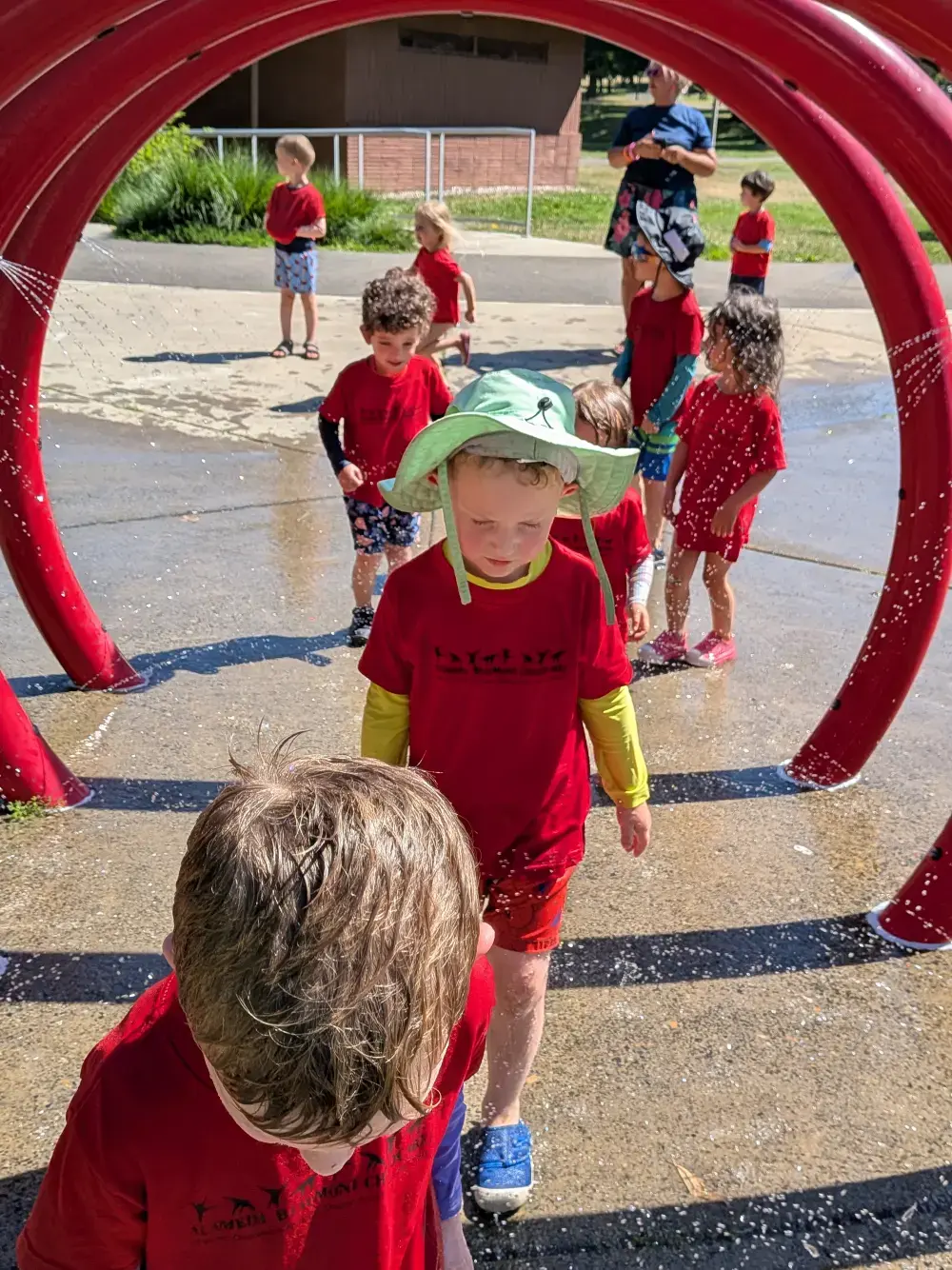
Climb aboard our own mini school bus into our car seats and the adventure will follow... At ABC we are fortunate to have a school bus to provide safe group transportation. Safety seats appropriate to the age and weight of each child are always used. Field trips are an integral part of our preschool program. They allow us the opportunity to explore and discover the world around us. We attend children's plays, enjoy concerts in the park, walk through the woods at the arboretum, pick fruits and vegetables and picnic on Sauvie Island. We also visit the gymnastics gym during the rainy days. We continually search new places to explore. Our play experiences are varied by the children's whims/desires. Rolling down the hills and splashing in the splash pad at Kenton Park, running through the trees at Pier Park, and raking and jumping in piles of leaves at Rose City Park are just a few ways we enjoy the parks around us. We continually seek out opportunities that will bring the children into their community.
Healthy food not only helps kids stay healthy, it helps them learn. We include food in our program in several ways, whether it's learning to set and clear the table, trying new foods or enjoy the social aspects of a shared meal. We also incorporate gardening and cooking in our curriculum.
Our meals and snacks are served at consistent times each day and follow the USDA guidelines for young children. We belong to a community supported agriculture, which allows us to visit the farm and collect our weekly share. Our share consists of seasonal fruits and vegetables. Please let us know if your child has any dietary restrictions and together we will work out a plan to accomodate them.
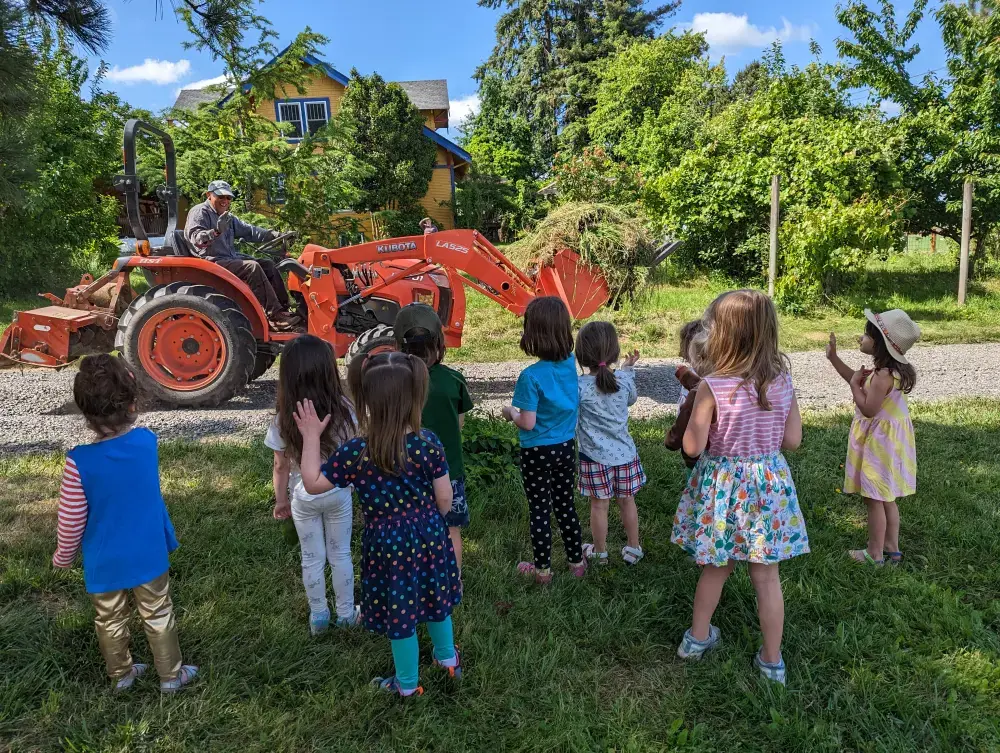
We climb aboard our bus weekly from April through October, to head out of the city to "our farm" La Finquinta Del Buho We might help Farmer Lyn plant seeds, collect up fallen apples to feed to the sheep and goats, or watch Farmer Juvencio plow the field with the big tractor. On nice days we bring our lunch and picnic in the orchard, running through the trees and around the gardens when we finish. Our School is a pick-up site, so we count out the vegetables each week, pack them into boxes and bring them back to school for our families and nearby community members. This provides us with opportunities for math exploration and vegetable recognition in a fun and meaningful way.
Watching the farm change from the beginning of the season to the end, rain and mud in April to the hot sun and berry picking in July to the beautiful days and cider pressing in October. The farm is an experience unlike any other.
For the health and safety of our ABC community members, we are a pro-vaccine school. We require all staff, and families to be fully up to date in all vaccinations including flu and covid. Thank you for helping to keep everyone healthy! We are 100 percent vaccinated!
We are fortunate to have artists in residence come to share their talents with our children. These experiences enhance all areas of our program.
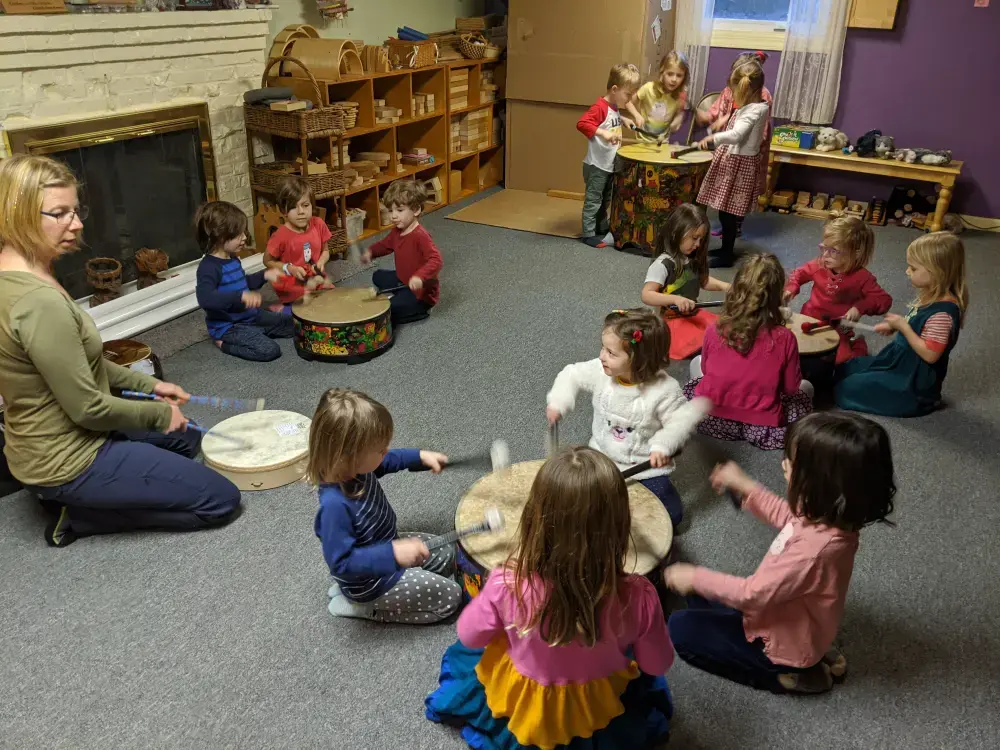
Every day children at ABC are surrounded by different types of music, whether they are singing, listening to CDs or exploring with instruments. Zazzy Zoe's been making music with youngsters of various ages for over two decades, and since 2013 has been a full-time preschool music teacher. While creating music, rhythms, and movements with objects like shaker eggs, dance/play scarves, frame drums, gathering drums, rhythm sticks, percussive instruments, and of course voices and bodies, students get to have FUN while forming/growing foundational musical principles and a love of music. Zoe also has an impressive collection of stuffies, which often make appearances during her classes. Her music often corresponds with the changing of the seasons, the natural world, time of year, festivities/celebrations, and weather, making the music relevant to our surrounding environment. Zoe loves to write original songs, modify the songs of others, and compose music and add lyrics to inspiring snippets she finds online. You can find out more about her at her website. Zazzy Zoe shares her music with us once a week!
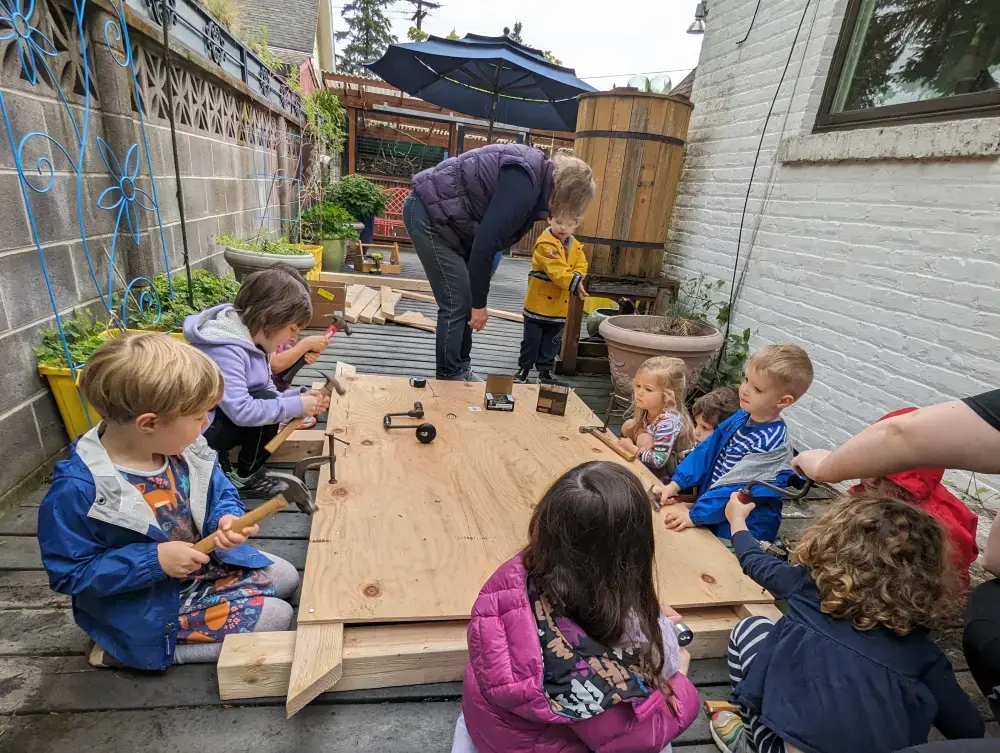
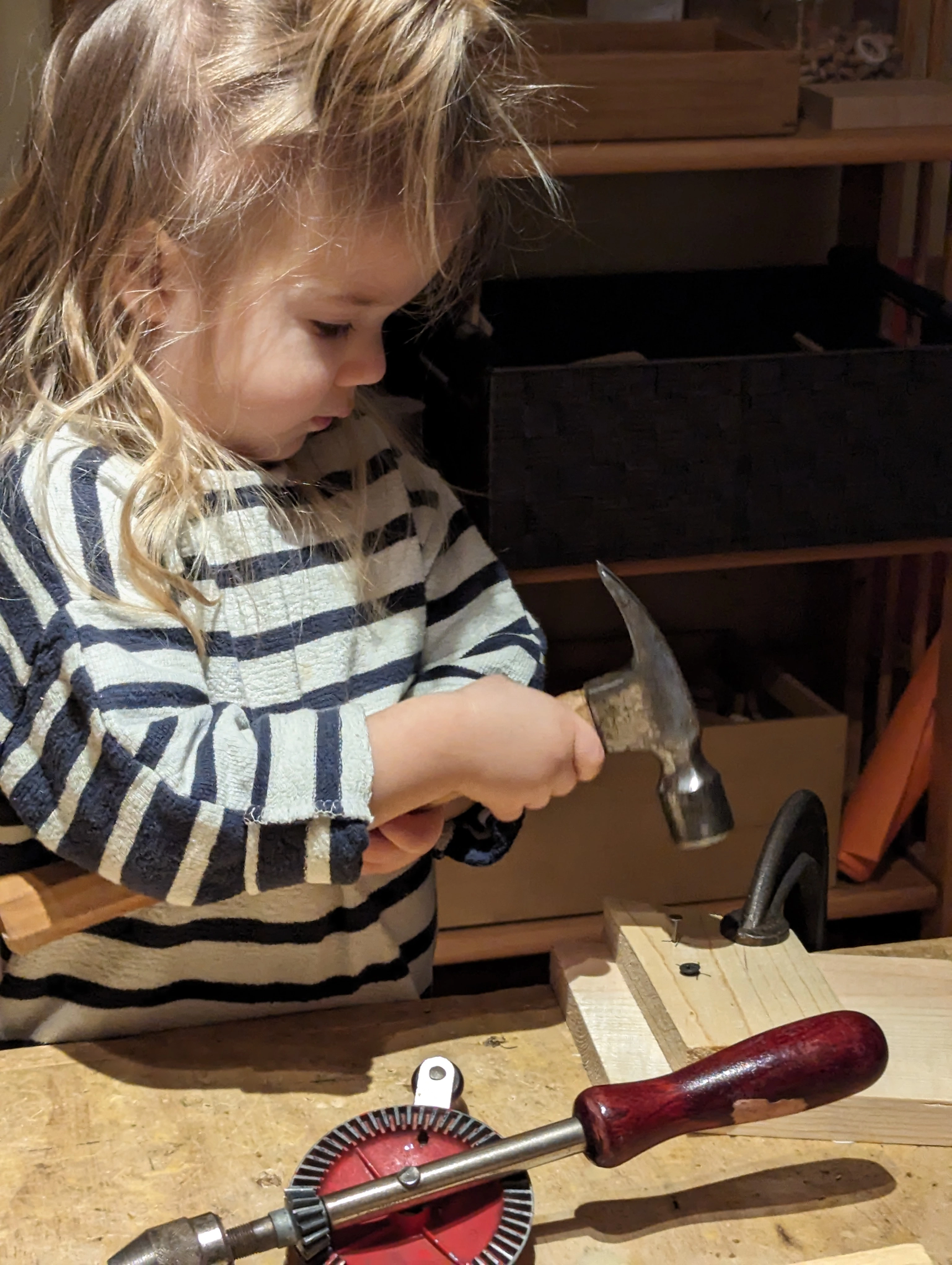
Jennifer has been teaching woodworking to children and teachers for over thirty years. She teaches children the basics of how to build their own ideas out of wood while using real woodworking hand tools. It is the mastery of those tools along with a basic understanding of the process that empowers their imagination and self confidence. Jennifer began her career in Los Angeles, California before moving back to Portland and teaching at Catlin Gabel School where she was the Beginning and Lower School Woodshop Teacher for 19 years. She has been teaching at ABC since the summer of 2005.
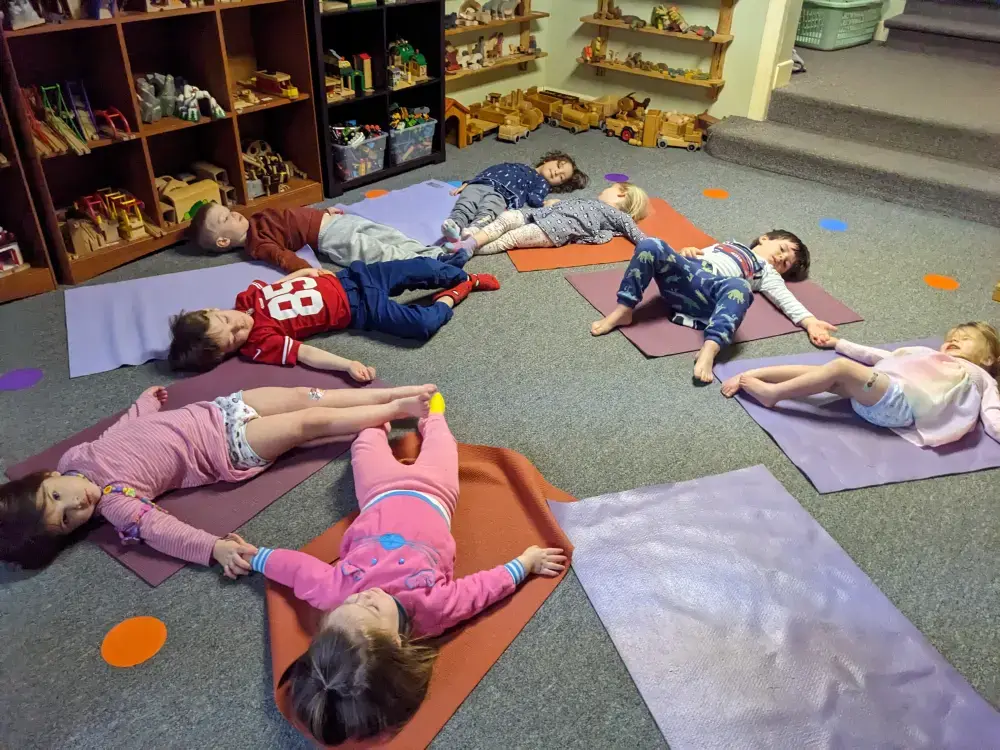
Grab a yoga mat and join us while we stretch and purr like cheetahs, wave our arms as we are trees in a big wind storm, or work together to pose as a group. At yoga time, we often do yoga with a seasonal or thematic focus. This is a fun way for us to get in touch with our minds and bodies and practice some self regulation techniques.These skills are useful at times when we are feeling upset. Breathing and silly poses help us to center ourselves and hopefully talk about our feelings.
We believe that all children need quiet time after a busy preschool morning. As children finish lunch and use the restroom, quiet music plays, the lights are dimmed and children are encouraged to choose a book to look at on their bed. Some children look on as teachers read books they've chosen. When all are finished, and book time is over, teachers help children fix their blankets and settle in for Chapter Book storytime. A teacher reads a chapter from our current chapter book. We discuss what happened yesterday, providing a great recall opportunity and then dive in to see what will happen today. Many children fall asleep during this time, others listen intently to the entire chapter. This quiet time leads us into our nap, where we all can recharge. Children that stay awake continue to look at their books or listen to story tapes.
At ABC we know that conflict is a natural part of learning to get along. But we also know that children need help in learning to express their own wishes and listening to those of others. We encourage children to "use their words" to work out conflicts. We support them when they express their feelings and desires. In this way, children learn important social skills and how to handle themselves appropriately in a variety of situations. It is our job to help in this process. When a child's wishes conflict with school rules for safety and respect, a teacher will give clear warnings and follow up with logical consequences. Often, this involves removing the child from one situation to a less stimulating area, where he or she can redirect their energy. Our goal is to help the child develop self-control without damaging self-esteem.
We invite you to ask questions so that you feel fully informed about our preschool program. The school has an open-door policy for parents, and we always welcome them to participate in the school.
We hope you will become part of our community here at ABC. We have created a program that develops a LOVE OF LEARNING by reaching out to each child's unique interests and introducing new experiences. Here, they are building a foundation of skills they will use throughout their school years and the rest of their lives. At ABC we make the learning real, relevant and memorable.